



Leaderboard
-
The Interpreter
Members22Points62,336Posts -
Gordon Bombay
Members17Points8,218Posts -
TTD-120-420
Members14Points5,238Posts -
standbyme
Members13Points3,502Posts



Popular Content
Showing content with the highest reputation on 12/01/2012 in all areas
-
14 pointsSo last night I couldn't sleep. As usual when I can't sleep, I watch something on Netflix. Recently, I just started watching Star Trek: Deep Space Nine. I was a huge fan of Star Trek: The Next Generation growing up and I've seen Star Trek: Voyager all the way through, so finally watching Deep Space Nine seemed like a good thing to do. So far the series has been good. Last night, I started season two around 5 AM. The episode, entitled "The Homecoming" deals with Major Kira going to the planet Cardassia to rescue prisoners of war from her planet. Herself and Chief Miles O` Brien infiltrate a Cardassian Labor Camp. The episode aired on September 26, 1993. Here's a still from the episode: Recognize anything familiar? Probably not. In a way I'm a bit embarrassed to mention that I noticed this, but it's still kind of interesting. In the above image, the random sphere objects at the "labor camp" can be seen in person at Kings Island: Flight of Fear was constructed during the peak of Paramount's ownership, Star Trek: Deep Space Nine was a Paramount Television show. I just thought it was interesting that whoever designed the Flight of Fear queue may have had access to Star Trek props - or maybe the spheres are just some kind of stock item that get used constantly. Anyway, yeah the nerdiest thing I've ever written, but here's your useless information for the day! Also, the altered photographs were taken by Don Flint of KIEXtreme.com, used with his permission, give his site a visit!14 points
-
Cedar Fair CFO Brian Witherow is featured in a major professional publication. Witherow discusses the challenges of working for a company which generates the lions share of its revenues in just 130 days, how no two revenue months share close resemblance to each other, and the challenges of allocating capital expenditures. The article delves into the study and analysis behind looking at historical capital expenditures to determine what worked and why as well as how to best proceed with future capital allocations. Very interesting. Enjoy the read: http://www3.cfo.com/article/2012/11/people_cedar-fair-point-brian-witherow-pos-amusement-parks5 points
-
Even though I am not a Deep Space person I think that is a VERY cool/amazing find! I would also love to know the back story of how it ended up on the ride...was there a phone call like "Hey, you got anything "space like" laying around the lot you don't need?" P.S. Yes, this IS probably your nerdiest post ever!5 points
-
5 pointsI'll draft KIfan73 into the game! Hard: A shot of KIfan73 at the KI Central Day asking Mr. Helbig what the park had planned after Diamondback...keep in mind Diamondback was still being constructed at that point! Easy: A shot of the damaged phones in Diamondback's line.5 points
-
4 pointsIt's ok, I got a picture of one of yours: Hard: The pay-to-soak geyser stations on WWC Easy: Another KICentral member4 points
-
Good points all. Great discussion. Let us consider other issues from the CFO.com article: the realization people standing in line are not spending money. This has driven the Point of Sale (POS) conversion at Cedar Point. Recall, the newly announced capital program focused on "hotel refreshment" includes installing several park POS systems. Improved customer experience, increased revenues, decreased shrinkage, all lead to more profitable operations. The growth of e-commerce revenues, up 35% following outsourcing of platform design, and pre-purchase expansion of product offerings (food vouchers, parking, accommodations, and admissions), resulted in significant returns. Look for ever larger percentages of revenues being generated from e-commerce in the foreseeable future as plenty of room exists for organic growth. Updated POS systems make the acceptance of vouchers/smart phone cash much more efficient and effective. Clues as to other CF properties which may be on the block might be found by looking at parks which have not been identified for new POS systems. Disposition of non-core assets such as the San Diego Soak City allows for the redeployment of additional capital to fund projects such as hotel refreshments. The "concentrated use of capital" on fewer projects resulting in greater returns can be seen in the Gatekeeper Coaster announced for Cedar Point. This is an expensive ride, concentrating capital expenditure (while reducing operating and maintenance costs associated with two older rides which it replaces), whilst integrating the new ride into the park entrance and parking lot thus enshrining and defining the park as a high energy park with the promise of connecting thrills. This capital strategy would seem to be an acknowledgement of the role of big coasters/attractions as generators of significant revenues and earnings. Reviewing the recent impact of Harry Potter at Universal Park(s) reinforces the concept concentrated capital investments have the biggest potential payoffs. Harry Potter drove attendance in excess of twenty percent. Cedar Fair now seems committed to funding capital projects which have the ability to "drive incremental attendance." No longer can FUN afford to add rides which simply satisfy current customers. Rides must now draw significant additional attendance and the corresponding increased revenues and earnings. CFO Witherow observes in relation to capital projects since 2007 "Was the ride’s appeal too narrowly focused? Did it twist people upside down too much, or something like that? Let’s not make that mistake again. The capital budget has to go across 11 properties.” Following the sale of SDSC the capital budget now will be spread across just 10 parks. Witherow's mention of Pepsi in the article also gives us clues as to the interview being conducted at least three months ago. One wonders if WindSeeker additions would have passed muster under the new capital allocation process. The conspicuous absence, as pointed out by The Interpreter, of consideration of out of park revenues is, well, puzzling. Again, recall, the recently announced hotel refreshment project at Cedar Point. That announcement included the news of removal of employee dormitories from the Point. However, the announcement did not indicate what portion, if any, of the refreshment funds would be utilized to accomplish this task. The announcement did include POS funding as part of the refreshment project. Those POS systems were slated for parks other than Cedar Point. Some wiggle room exists for the use of the announced refreshment funds. Other off park projects may also be addressed with these funds. As previously discussed on these forums, the refreshment funds seem excessive at a cost of between $56,250.00 to $75,600.00 per room, considering building costs per new hotel room, excluding land costs, are currently estimated at $56,100.00 for the budget/economy segment. Hotel refreshment and price segmentation will likely spread system wide in the near future. Hotel improvements may include additional or enhanced restaurant and food venues which may also do double duty and serve on park guests. Food improvements at Knott's Berry Farm this past year will continue to be refined and rolled out system wide. Dinning is arriving on parks and will supplant eating on park. Higher quality foods may result in increased food costs as a percentage of sales. The trick will be to increase incremental food sales to offset loss of profitability achieved by lower food cost items. Leland Wykoff4 points
-
3 pointsI'm just letting it be known that I bought the record, I have a working turntable and if there's a demand for it, I am willing to digitize it and upload to YouTube or some other site. Then I can post it to KIC for all to enjoy!3 points
-
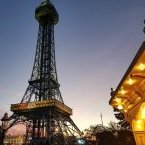
They need to make eating as unique and out-of-the-ordinary as other things in the park. What's sad, is that they used to have a great example of this: dining with a panoramic view of the fountains and Eiffel Tower.3 points
-
3 pointsOkay when I woke up this morning I thought to myself saying "now that, I am putting on that KICentral Kings Island dreams thread". So here is my dream: my dad and I entered the most wounderful park on earth, Kings Island, every thing was normal we headed to Diamondback, and had a awesome (not)ride we then headed to backlot had a normal ride on that. We decided to ride it again, but this time it was different it start with a backward launch that then droped you into warehouse thing and you stopped and the track turn to a different track segment ( like the one at Firehawk ) it then launched us forward up this diffent track. We went up then into a dark room and it "felt" like Flight of Fear then suddenly the lights turned on and it was like a homedepo, it continued to coaster along the track through this home depo until it came to midcourse breack run, but our restraints came up so my dad and I hopped out with the entire train except for this one guy who didn't get in time he was still standing though and the train launched and did what you would expect to happen. I started to look around the ceiling was clear and above us was The Beast exespt half of the first lift hill SSS gone like just a clean cut. I asked my dad where are we? He replied saying this " there used to be a home depo here before you were born" But every thing look perfect and all modern. Some how we got out and I am not going to depth about that but when we came up we were in river town so we went to Diamondback, witch started off normal but halfway through it the track changed colors into yellow and it started acting like behemoth, suddenly there was no track but the train came to a stop we were evacuated we decided to head home as we came back on international st. The fountIns were not fountains it was a broader lake and with like paddle boats on it. It started to hall so we ran to a breakers hotel where Action Zone would be and dried off there and then I woke up. There were a lot of weird thing that I did not go into detail about also.3 points
-
2 points^Ha ha! (It's jcgoble3 for those that don't know) Hard: Park Approved Photo Inside Mysteria Easy: Backlot Helix With Train2 points
-
2 points
-
Hey, even if you aren't able to ride the new Test Track (which it looks like there's a good chance of), at least you're at Epcot!2 points
-
Haha, that's kind of what I was hoping to accomplish by posting this. I'm hoping that with the vast communications that is the internets... someone from Paramount Parks back in the day may chime in and say "Oh yeah, we got those from..." or explain the backstory. And yes, it is nerdy. I will say though that it's nerdy not because of Star Trek, but because I saw the scene and was like: "Wait, I've seen those before. Oh yeah, Flight of Fear. Must. Make. Post."2 points
-
Sometimes simple evades management. Smart phones? Apple Computers? iPads? No Flash. Cedar Fair's eCommerce? No Flash, no buy. Does NOT compute. Requiring paper vouchers when guests may not have ready access to a printer? Does NOT compute. I.T.? Operations? Finance? Somebody ought to claim ownership and FIX this. It's not smart. At all.2 points
-
Very interesting. Some key takeaways, as I see them: * it's clear new management is managing differently. Note the we started looking at past capital and its returns. Polite way of saying we relooked the coaster czar's way. * Note the focus on operations, even by the CFO. * Note the rejection of the "people gotta eat" philosophy. I noted the money leaving as people bailed on those food lines. Next perhaps a focus on money and time spent in the park as guests leave for the parking lot/coolers and surrounding restaurants to evade drastic overpricing and/or actual or perceived lower quality? * Note the concentration on fewer, larger projects but not overly aggressive--spectacular but not just limited to the thrill market. * Note how little (none) is said about out of park revenue. Perhaps coincidental, but still a little strange. * Note the increased paying attention to how Six Flags, Disney, etc. do things. Thank Q and Mr. Ouimet in large part. * Diversion. Yep, diversion. Small new things like shows not part of capex. Large, concentrated, not overly physically aggressive capex. Or it could mostly ALL be a diversion.2 points
-
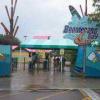
2 pointsHard: Don Helbig at a KIC event, Coasting for Kids counts Easy: Boo Blasters sign2 points
-
2 pointsI had an employee chase me out of AZ with a chainsaw once. Right by Stunt Crew Grill. The nerve of people...2 points
-
1 pointAlight it's been awhile since we've had a offseason game here on the boards. This game is simple and involves your pictures you took at Kings Island. Rules: The post above yours will have two choices of locations in the park one "easy" and one more specific "hard" If no one responds for over 2 days or so feel free to skip the photo and move on. Use your personal photos you've taken. No searching the net for photos. Keep photo locations CURRENT BE CREATIVE http://www.KICentral.com/forums/index.php?/topic/26828-ki-photo-chain-game/page-6#entry498081 ~~~~~~~~~~~~~~~~~~~~~~~~~~~~~~~~~~~~~~~~~~~~~~~~~~~~~~~~~~~~~~~~~~~~~~~~ Example Post Hard- Coney Mall Arch (Location in the park that is more specific) Easy- Diamondback Splash Down (Location in the park that is more vague) and the response post would be... Hard- Viking Fury Entrance Sign Easy- Vortex's Batwing1 point
-
1 pointAccording to a https://www.facebook.com/greatohiocc/posts/450846134978027'>report by the GOCC from the ACE Northern Ohio Holiday Party at Cedar Point, CoasterMania will return to the beginning of June next year. It will once again be a one-day event, this time on Friday, June 7. That's the weekend immediately after HoliWood Nights. Who's planning on going? 1. jcgoble3 (assuming I can find room for both HWN and CM in my budget, otherwise HWN likely gets priority)1 point
-
1 pointIf you read the PDF, then you didn't read all of it. Pages 25 & 26 address both the items you mentioned. First T2 - Two new trains at a cost of 2.2 million, and Thunder Run, rehab of current trains, costing 30k. http://www.kentuckykingdom.com/site/wp-content/uploads/2012/10/KKRC_ResponseOct2012w.pdf1 point
-
1 point
-
1 pointActually the people with working turntables is increasing, as records are making a small comeback. You may possibly be right, I know there is still that vinyl niche out there...but my theory is that the number of people over the age of 40 who decide on a daily basis that it is time to finally pack up their old turntable outweighs the younger generation who are out there buying them. (I see them at rummage sales and auctions fairly often.)1 point
-
1 point^ I recall seeing that in a video as well, but I can't find it either. I'm pretty sure the reasoning was that vertical forces are much lower in a corkscrew than in a vertical loop.1 point
-
1 point
-
1 pointMy alarm clock is also a working CD player, though it hasn't been used for that in a while. I also have a combination turntable and tape player buried in the living room, but I don't know if it still works.1 point
-
I will be at Epcot on Monday. I am hoping for a soft opening1 point
-
Squee! http://www.youtube.com/watch?v=JRoILMhldd4 It looks much more EPCOT than it does Epcot, which is a very good thing.1 point
-
1 pointI realize this is a pretty huge bump, but given that this is the closest thing this site has to a general "interesting eBay items" thread... Have you guys seen the Kings Island Wurlitzer organ record that's on eBay? http://www.ebay.com/itm/QUEEN-OF-KINGS-ISLAND-Volume-1-LP-Wurlitzer-Duplex-Orchestral-Organ-Style-157-NJ-/370688555240?pt=Music_on_Vinyl&hash=item564ec278e8 Its Buy It Now price is $7.50. I don't personally have that much of an attraction to it outside of novelty (and don't have a record player), but I figure someone here might be interested. Just thought I'd pass it along!1 point
-
See Cedar Point. See B & M Wingrider. See how aggressive it looks. Ride a B & M Wingrider. "Wild" Eagle will suffice. Ride Maverick or I-305. Remember the modifications done to each of those last two. Compare downtown. Watch the....diversion.1 point
-
1 pointNot exactly woodstock express but The Beastie was the closet thing I could find on my files of the kid section of KI. Do I get it? If it does count Hard: one of the locomotives parked infront of the engine shed Easy: Flight Deck view from GWL1 point
-
1 pointDane installed the update. When I reported my issues, he asked that I start this thread.1 point
-
1 point
-
1 pointOh he cursed me alright, it was on his microphone so basically everyone heard it. I just went on my merrily way because it didn't effect me emotionally and also my 11 year old cousin was with me so I didn't want to cause a scene. Also, I wanted to enjoy my day and not have to worry about some idiot who doesn't know how to behave when he's working. If I would have went to someone and complained, it would take forever to explain what happened: have the game booth guy come, him denying everything and all that other pointless drama. Like I said, I wasn't upset about it but I did think that it was rude1 point
-
1 pointMy only post on this and hopefully we'll get back on subject: On the first point here: Age doesn't have to do with maturity....how many people over 18 have been killed because they were drinking and driving? How many people have gotten hurt because there were driking and driving? How many people over 18 have killed or hurt other people because they were drinking and driving? So saying that the reasoning was that the youth were too young and immature and would drink and drive, isn't a valid point, many many many people over 18 do this and it's unfortunate. On your second point: Instead of posting about how you think the law should change on KIC, why don't you contact your representatives and senator? We don't have the powere here to magically change the law. Nor would I think KIC would get behind it, but you can actually be proactive and talk to your representatives and senator to maybe get your view point out there. And again, it's not a law that you have to be 21 to rent a room, it depends on the property and property owner.1 point
-
1 point1 point1 pointIm lucky i havent been cursed at for me wearing LaSalle shirts. BTW i dont like St. X either . Back on topic ive seen lazy employees at Firehawk who get annoying when even the trains on the lift the dont send people in. Some where a tiny bit rude when we got stuck on the blue racer. But otherwise Ki employees have been good to me.1 point1 pointOn a early summer weekday, my brother and I rode it at night, three times in a row. With no one in line or board our train, we asked the ride ops if we could just stay on for another lap. He stated that they wanted us to unload and go all the way back through the que line, so we could get a small break in between riding. So basically they were telling us that it is too rough to let my brother and I not to get a small rest in between laps on SOB. Btw, they let me do the exact same thing on Beast one year (without physically getting off the ride)1 point1 pointEr... what? The stubbornness of some people will never cease to amaze me.1 point1 pointYou dare hotel and bar owners to follow the law? Just because he or she has been in combat does not make him/her supreme over the law.1 point1 pointHard: A pic involving 3 trains from 3 different coasters Easy: A picture of any of the Planet Snoopy gang1 point1 point1 point1. This thread had been dead for a month and a half. Threads that old generally shouldn't be bumped unless you are contributing something new, such as a recent development in the story. 2. Could you please at least TRY to make an effort at proofreading your posts? I really shouldn't have to point out to someone who's already made nearly 200 posts that not only do the Terms of Service require that you do so (indeed, it's the very first thing in the TOS), but it's a basic courtesy to your fellow posters to not force us to rack our brains in a futile attempt to decipher your posts.1 point1 pointThis is just too sad to even read. 1. Its hard to fathom seing one's own son getting mauled by things that wish to kill 2. I wish that the boy was not inside this incident period. There is a reason why we dont like things that kill things, they kill us. 3. My prayers go out to those who are affected by this.1 point1 pointPutting a path underneath of Adventure Express? Is this Roller Coaster Tycoon?1 point1 pointI just found out that a fellow KIC member Keith Harrison (KIFan1980) passed away last night after a heroic battle with cancer. I first met Keith at the Diamondback station waiting in line. I was new to KIC and to being a coaster enthusiast. Keith recognized me from my avatar and extended his hand to welcome me to the family. I will miss you for now, but am sure that we will meet again and i know that his hand will be outstretched when we reunite. (Contributed by DaveStroem)1 point
 We will make some parts of the ride available to purchase (track, wood from the structure, bolts). Each of the items will be limited in quantity. We will let everyone know when they become available.1 point
1 point1 pointThe best Action Zone was when they still had King Cobra and SOB. You can't make it any better than that.1 point1 pointThis leaderboard is set to New York/GMT-04:00
We will make some parts of the ride available to purchase (track, wood from the structure, bolts). Each of the items will be limited in quantity. We will let everyone know when they become available.1 point
1 point1 pointThe best Action Zone was when they still had King Cobra and SOB. You can't make it any better than that.1 point1 pointThis leaderboard is set to New York/GMT-04:00